
- Home
- Who is CAPA
- CAPA News
- Resources
- LabCAT
- RMAEC
- CDOT
- Career Center
 HiMod, Part 2: What We Are Learning on I-70 (Rifle)Colorado's First HiMod Project, Two National Webinars, and the Questions You Asked by Brandon Brever, P.E. See you at the CAPA Summer BBQ - Friday, August 7th Register for our upcoming webinars 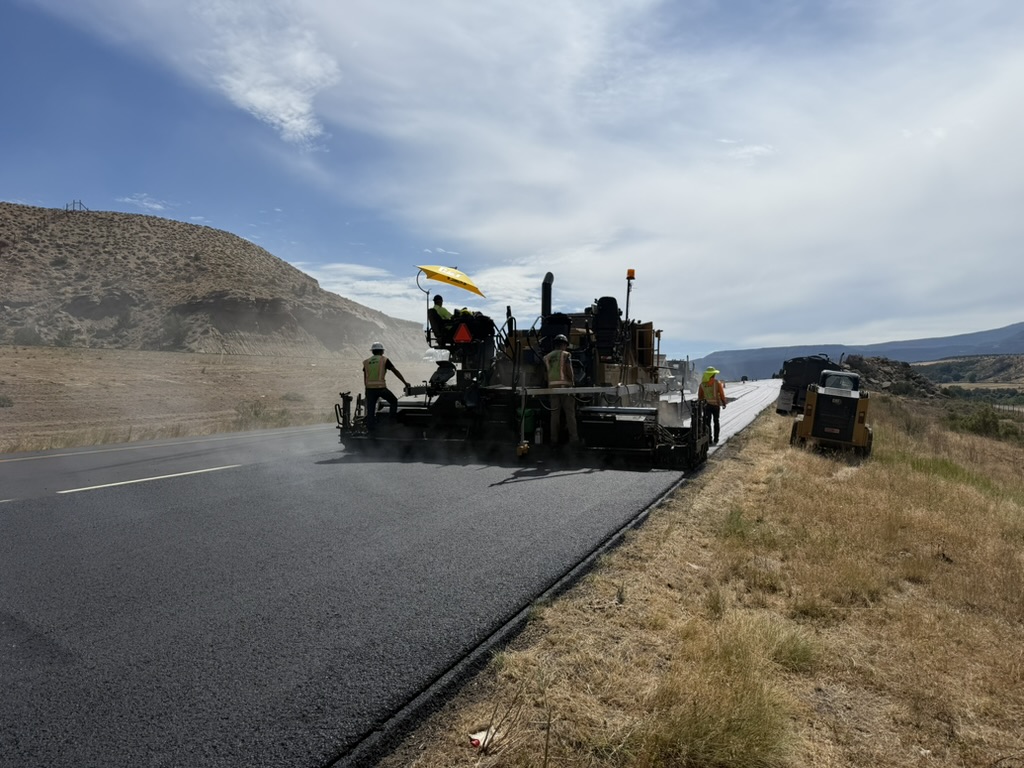
Colorado's first HiMod mat, I-70 near Rifle. CDOT Region 3, paved by Quikrete. In June we introduced HiMod to Colorado's local agencies. That article covered what it is, why Utah went all-in on it, and why CAPA was working with CDOT to bring it here. A lot has happened since. CAPA hosted a project open house on I-70 near Rifle, where CDOT Region 3 and Quikrete placed Colorado's first HiMod mat. The Asphalt Pavement Alliance ran a national webinar on high-polymer mixes with Buzz Powell. And CAPRI Chats hosted an "Ask Me Anything" panel with the people who developed the system, including UDOT's Howard Anderson, Ingevity's Luke Peterson, the Asphalt Institute's Reed Ryan, and Montana DOT testing staff. Between those three events, most of the open questions from the June article now have answers. Here is what we learned, organized around the questions agencies actually asked. The Short Version
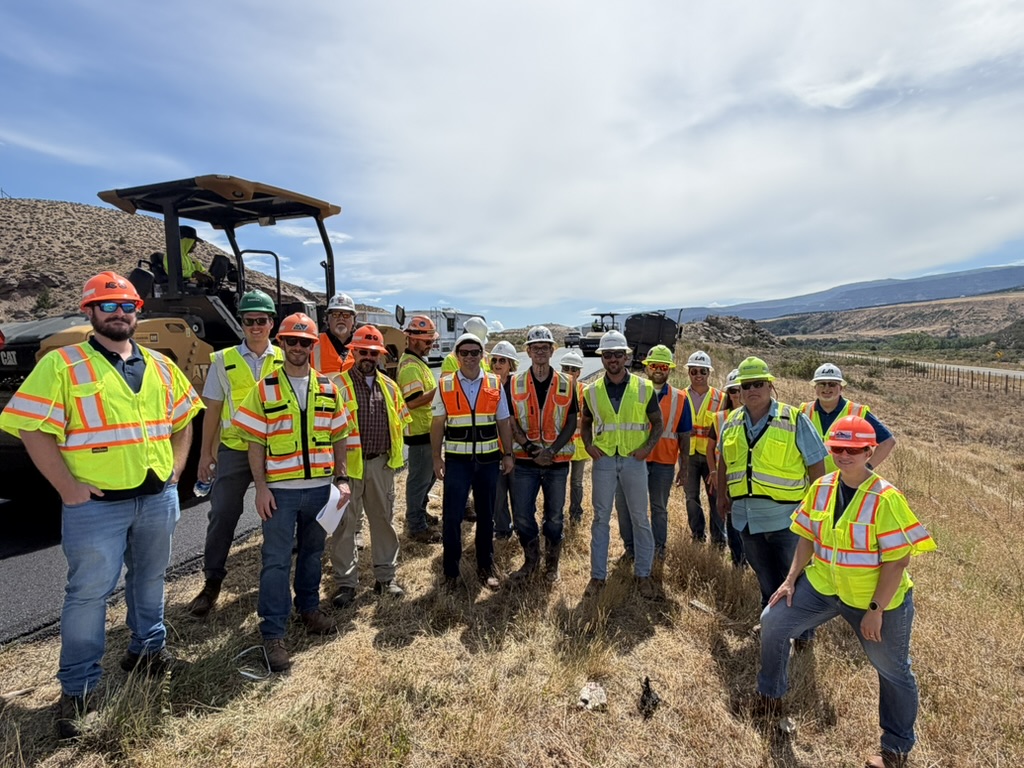
CAPA hosted agency staff, airport engineers, contractors, and CDOT personnel at the project open house. TerminologyThis one matters enough to lead with, and it is the most common mistake being made nationally right now. HiMod is not a binder. It is a system. The performance comes from five things working together:
Pull any one piece out and you no longer have HiMod. You have a stiffer oil in a normal mix, at a higher price, with none of the structural benefit. You will also hear HiMA and HPG. HiMA is a proprietary product name. HPG is the term Texas uses. "High polymer" describes the binder. HiMod describes the mix. If a supplier or contractor tells you a tanker is "full of HiMod," that is a red flag. Buzz Powell ran into exactly that on a project, and the tanker held standard polymer-modified binder. The practical lesson from Montana DOT, delivered bluntly on the CAPRI panel: do not modify the specification. Montana changed the binder requirement on their first pilot, and it cost them a project. Their second project was a copy of Utah's spec and went flawlessly. Tailor your acceptance practices and pay factors if you need to. Leave the material system alone. Questions From the I-70 Open House & WebinarsThe open house drew agency staff, airport engineers, contractors, and CDOT regional personnel. These were the recurring questions. "With that much binder in it, won't it flush?"This was the number one concern going in, and the honest answer from the field is that it did not. Across the I-70 project there were maybe one or two suspect spots, and the read from the Asphalt Institute was that those may have been slight segregation reading as an apparent fat spot rather than true flushing. The risk is not zero, but it is a mix design issue rather than a construction issue. If the aggregate blend runs coarse of the maximum density line, fat spots can develop. The fix is to raise the percent passing the No. 8 sieve using screenings, which adds aggregate surface area to carry the extra binder. Be aware that doing so reduces macrotexture, which matters if HiMod is your surface course rather than a capped intermediate lift. Utah's experience says this mix is remarkably forgiving on the rich side. One project left a section at 7% binder against roughly a 6.4% spec target. It took a pay penalty and it still is not moving. "Can we actually hit density?"Yes, and more easily than on conventional mix. This surprised people, so it is worth spelling out. HiMod appears to require less compactive effort than a conventional mix. The high binder content and low-void structure make the material want to densify. On the I-70 project the breakdown roller was doing nearly all of the work, roughly 94% behind breakdown and about 96% after the second roller, with the mat finishing consistently at 97 to 98%. The contractor ran a fourth roller in anticipation of higher paver speeds, not because density demanded it. Three appear to be sufficient. 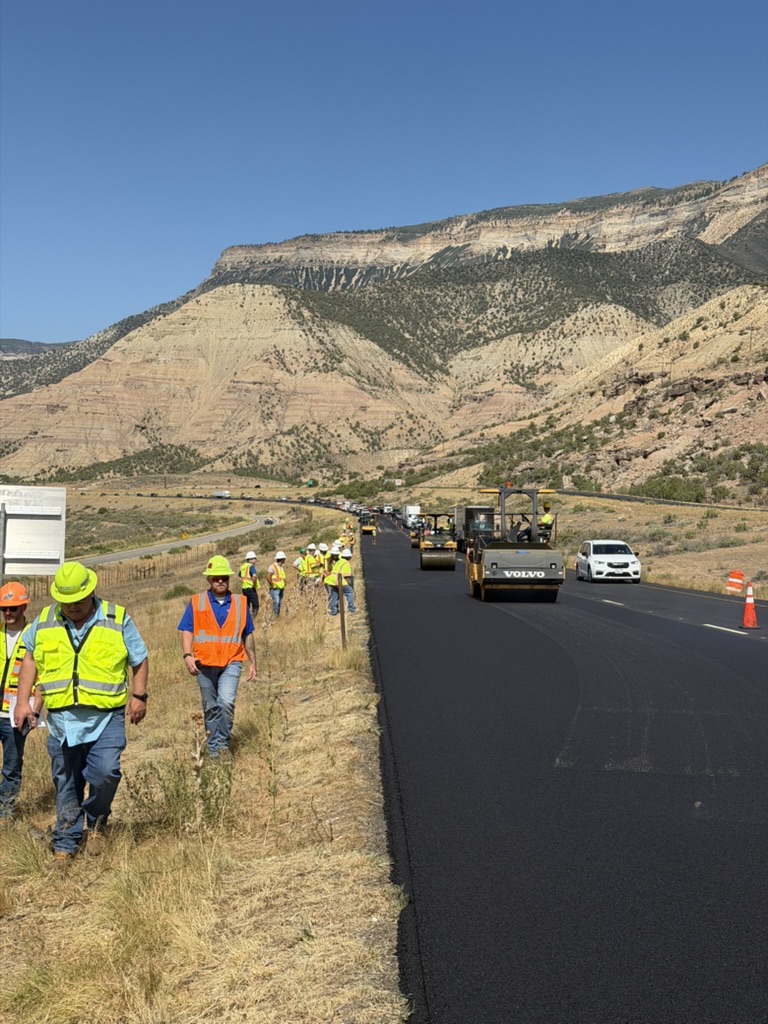
The breakdown roller did nearly all of the work on this project, with the mat finishing at 97 to 98%. On the CAPRI panel, Luke Peterson made the same point from the contractor's side. On HiMod the intermediate roller often drops out of the train entirely. Less equipment, less effort, better numbers. Utah's statewide record backs this up. Their mainline density specification for HiMod is 96%, three points higher than the 93% they require on conventional mix, and contractors report hitting 96% on HiMod more easily than 93% on standard mix. The statewide average across more than 50 projects is 96.9%. In 2025, out of roughly 41 projects, only one missed the mainline requirement, and it came in at 95.8%. Thick lifts compact fully. Utah's first test section went down at 7.5 inches loose, compacted to 6 inches, and cored 97 to 98% clear through the lift. CDOT's specification on the I-70 project set 96% on the mat and 94% on the longitudinal joint, PWL-based. The joint is where the effort actually goes. Seven of Utah's 2025 projects had joint struggles while the mat was essentially a non-issue. At four inches or thicker, 94% at the joint should be readily achievable, and pneumatic and oscillatory rollers both perform well there. "Do we need special equipment?"Less than you would think, and notably less than SMA. At the plant, the honest answer is one item: the pump. This binder is stiff. Most plants run 3-inch lines and 3-inch pumps, and the recommendation is to move to a 4-inch pump while leaving the lines alone. Verifying that the AC pump, piping, meters, and strainer can handle a binder several times stiffer than PG 76-22 is a shop task with real lead time, not a day-of adjustment. Recalibrate the AC meter and source an oversized strainer. There is no fiber to manage and no other plant modification required. The panel's advice to agencies weighing a performance mix was direct: the barrier to entry is lower than SMA, so skip SMA and go straight to HiMod. In the field, the equipment is conventional. What changes is how you run it. "What actually goes wrong on a first project?"Binder sitting in the tank. High-polymer binders cross-link when stored hot, and viscosity climbs. Several producers recommend a two-day maximum use window. Others say five, with measurable stiffening by day five. NCAT nearly locked up a tank over a single weekend. Utah's one trial project back in 2017 came down to viscosity creep in a tank feeding a plant with an undersized pump. The mitigation is not cooler storage, because elevated storage temperature is what keeps it pumpable. The mitigation is short residence time. Order binder to arrive rolling with production rather than stockpiled ahead of it, and identify in advance where leftover trial batch binder goes so it does not sit. If a weather delay or holiday shutdown is coming, call the supplier before it becomes a problem, not after. Material handling at the paver. NCAT lost a full day when 25 tons went into a shuttle buggy before the augers were turned on. On Utah's very first HiMod project, a normal-sized windrow plugged a shuttle buggy within five minutes of starting, and they only recovered because a second buggy was already on the ground. It has since been run successfully through every device type, but the MTV operator needs a specific briefing, and half loads are better than full hoppers sitting idle. 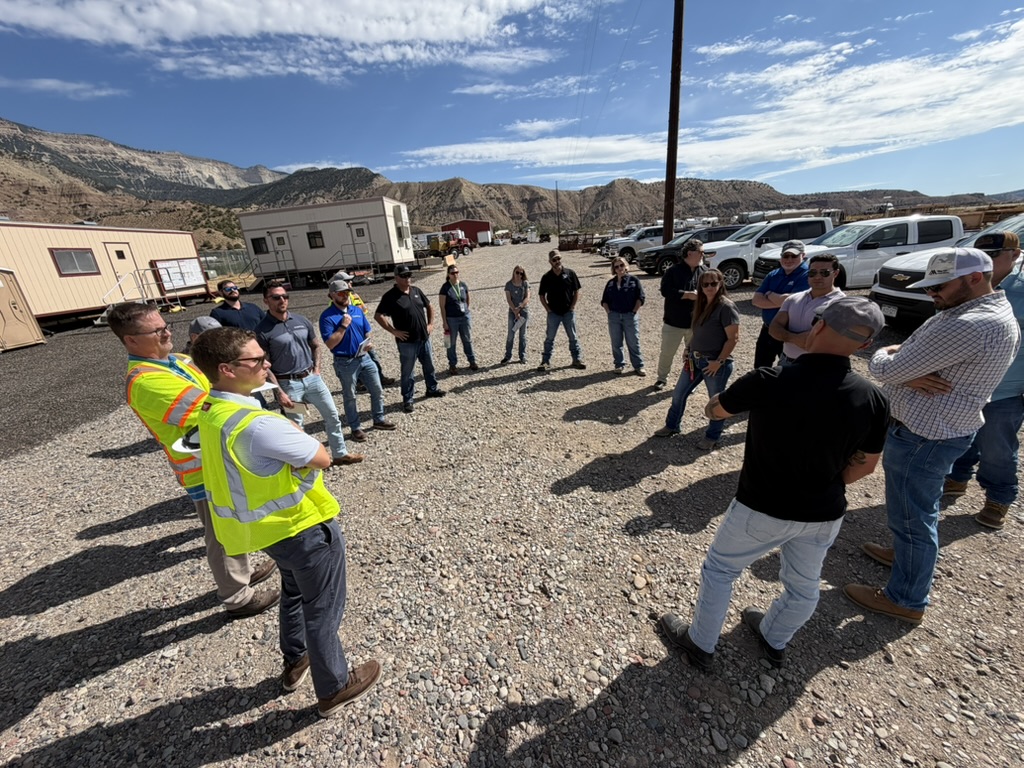
Open house trailer meeting before going to the project on I-70 Paver stops. Keep the paver moving at a consistent pace. This mix is stiff and it is rich, and when the paver sits, material in the auger chamber cools and gums up the augers. What would be a routine stop on a conventional job turns into a cleanup on this one. Plan the work to run this mix daily until complete, and do not piecemeal it. "Where does it belong?"A constraint is handwork. TXAPA's guidance points HPG toward interstates, limited-access roads, and straight runs, because this material does not rake well and does not compact well anywhere it has to be worked by hand. Buzz Powell's own contractor described the handwork on an NCAT parking lot placement as challenging. That is a genuine limitation and it deserves to be taken seriously in scoping. This is not necessarily a reason to write off local agency work. It is a reason to design around the handwork. Where the paver can run long and continuous, with hand pours minimized and planned in advance, projects have gone well. Where the work is mostly hand pour, tight radii, and constant utility interruptions, this mix will fight you. Most local projects fall somewhere between those two, and where yours lands is a scoping decision rather than a yes or no. Applications worth a look:
"What about our old, bumpy concrete roads?"This was the question that kept coming back at the open house, and it may be the most important one in this article for a local agency. Anyone who drove out to the Rifle project passed long stretches of rough, deteriorated concrete on the way in. Colorado has a great deal of that pavement, on the state system and on city and county streets alike, and most of it is programmed for either an expensive rehabilitation or nothing at all. Dave Johnson of the Asphalt Institute walked the group through what Utah has learned, and Utah has now tested essentially every version of this question. Utah's Concrete Overlay Record
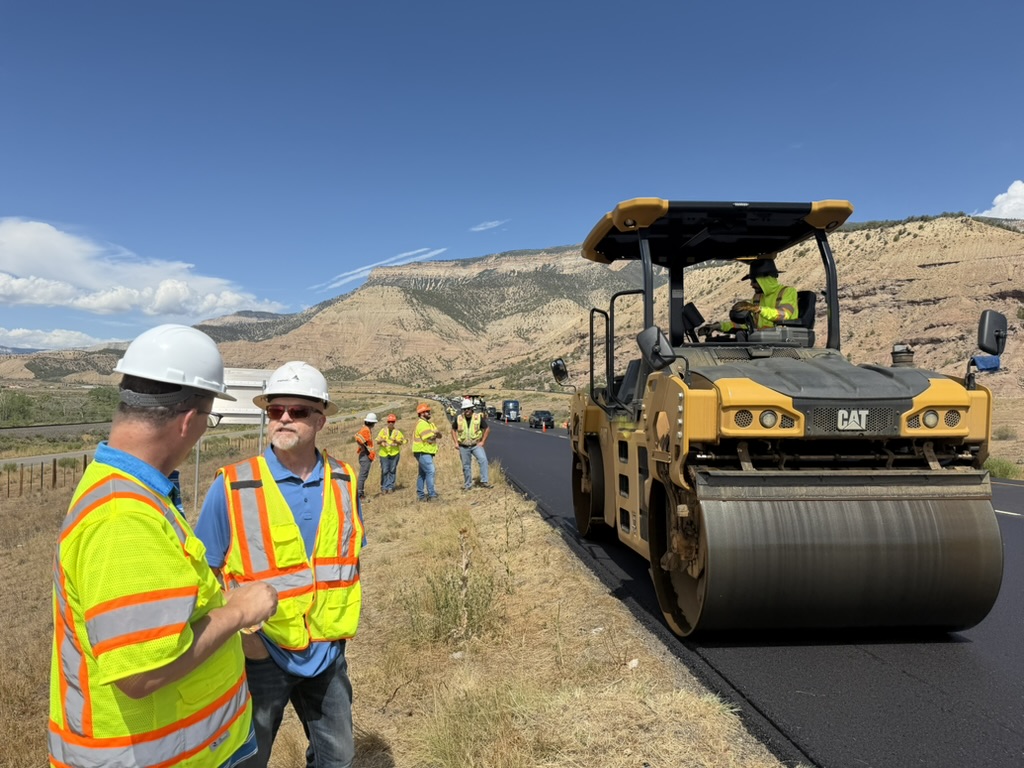
Ryan Proctor (Suncor) - Left, Dave Johnson (Asphalt Institute) - Right The mechanism is the binder. A high-polymer binder retains far more elastic recovery than a conventional one, so the mat absorbs the movement at a joint or crack instead of transmitting it to the surface. Thickness and low air voids do the rest. Two cautions. The payoff is in the design. UDOT Region 4 is now crediting this product with a 30-year service life, up from 20, which is higher than what they credit SMA. On the NCAT test track, high-modulus material behaved perpetually at roughly 6 inches of asphalt placed in a couple of lifts, with distress confined to the surface where it is cheap to address. Historically, perpetual pavement thinking meant something closer to 15 inches. In head-to-head new construction or major rehabilitation, a high-modulus asphalt section can approach a 1:1 thickness comparison with concrete. For a city or county sitting on aging concrete streets, that is the whole argument. The alternative to a HiMod overlay is usually not a cheaper overlay. It is reconstruction, or it is continuing to patch. "Can we place it in the fall?"No reported cold-weather problems so far. The governing factor is lift thickness against the cooling window. A 3-inch lift at 40°F is manageable. A 1.5-inch lift at 40°F is a real concern. Density comes quickly with this material, so it becomes a matter of balancing the cooling window against the densification window. If you miss density, you have the same problems you would have with any other mix. Plant temperatures in Utah rarely exceed about 330°F, and shorter local hauls have run 315 to 320°F. Haul distance has not been the constraint people expected. Utah has run a four to six hour one-way haul with this mix using a shuttle buggy, and the mix arrived at Wendover around 300°F after two hours. The Performance RecordFor agencies that want the durability case in one place:
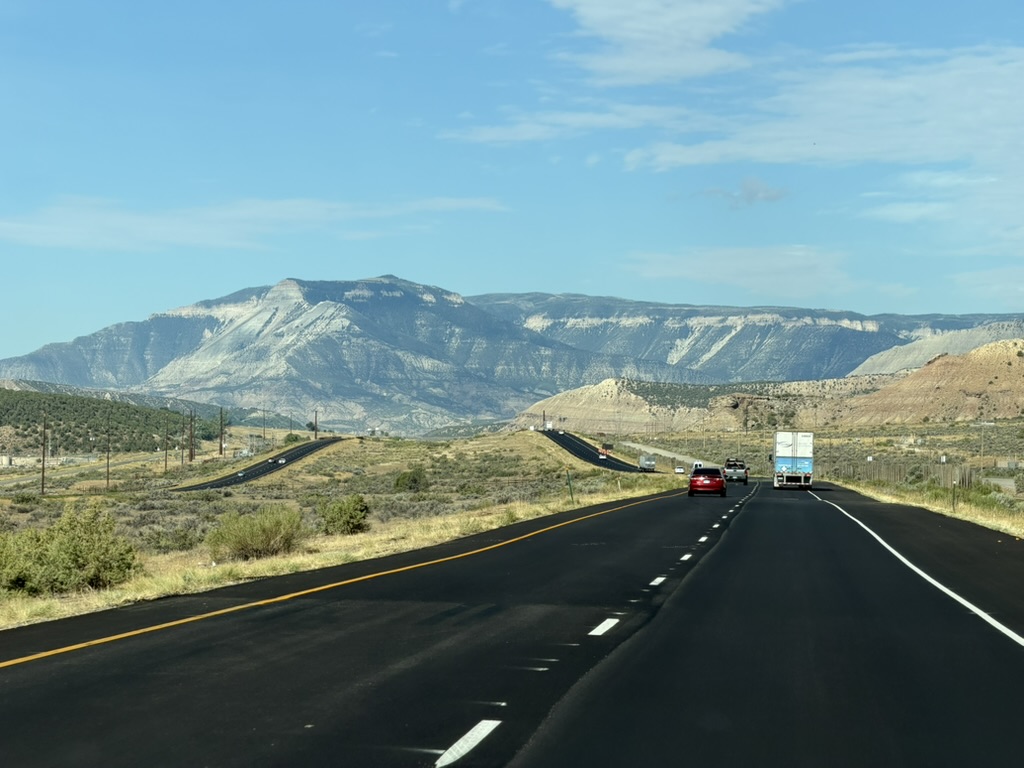
Laboratory numbers are outstanding. IDEAL-CT results land in the 500 to 1,000 range, comparable to SMA, at a time when some states are setting thresholds around 40. Texas Overlay specimens would not break. Lottman testing retained 100% of tensile strength without lime after five freeze-thaw cycles, and above 100% with lime, against typical specifications of 70 to 80. That is why these behave effectively as one-sided, balanced mix designs. Cracking resistance is close to a given, so the lab attention goes almost entirely to rutting via a rigorous Hamburg requirement. What's Next in ColoradoCDOT Region 3 has two I-70 projects planned for next year totaling roughly 18 miles, with PG 76-34 approved across all of it, including the tie-in roads. A section north of Almont is possible depending on schedule. Region 3 sees strong potential over the older concrete sections along that corridor, both as straight overlay and in rubblize scenarios. Other CDOT regions have candidate locations in mind and are waiting to see how this first one performs. The Rifle project will not carry special instrumentation. It goes into the normal annual pavement condition survey with the rest of the network, with the mileposts flagged so the data can be pulled and tracked separately. On CAPA's side, three things are underway:
CAPRI has also announced a Part 2 AMA session with the same panel, and roughly 150 submitted questions went unanswered in the first one. If you have a Colorado-specific question about altitude, local binder slates, or CDOT acceptance, this is a good moment to get it in. From the Project Open House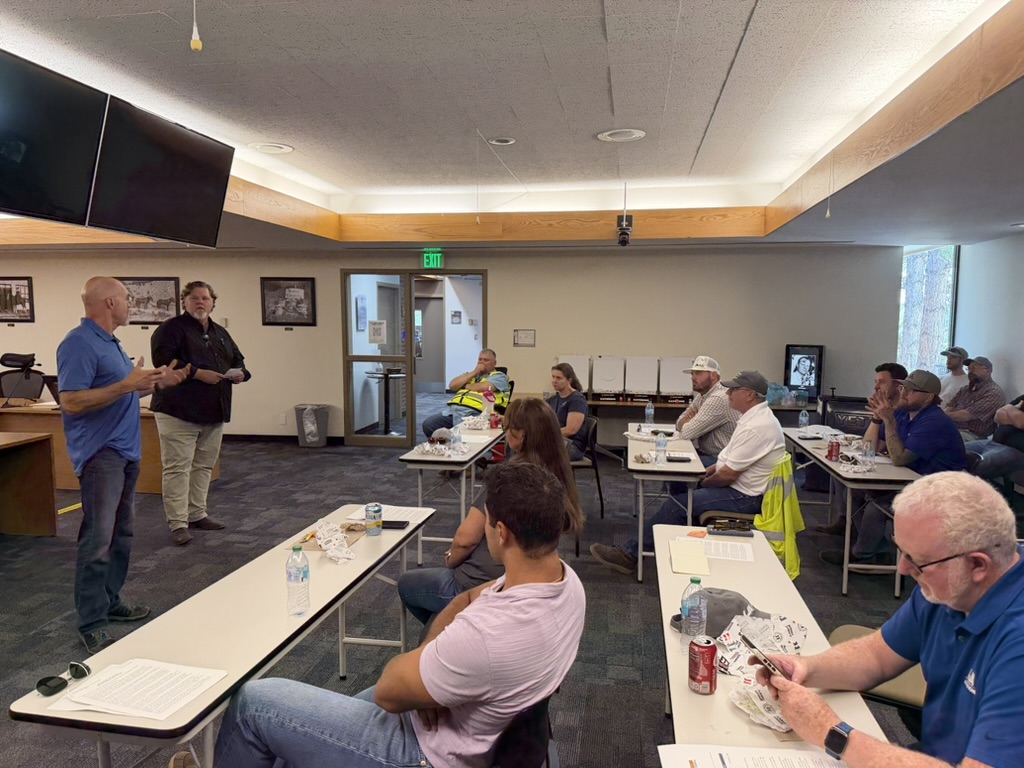
Dave Johnson, Asphalt Institute (L), and Mike Skinner, Asphalt Pavement Alliance (R), gave their national perspective on experience with projects throughout the country. 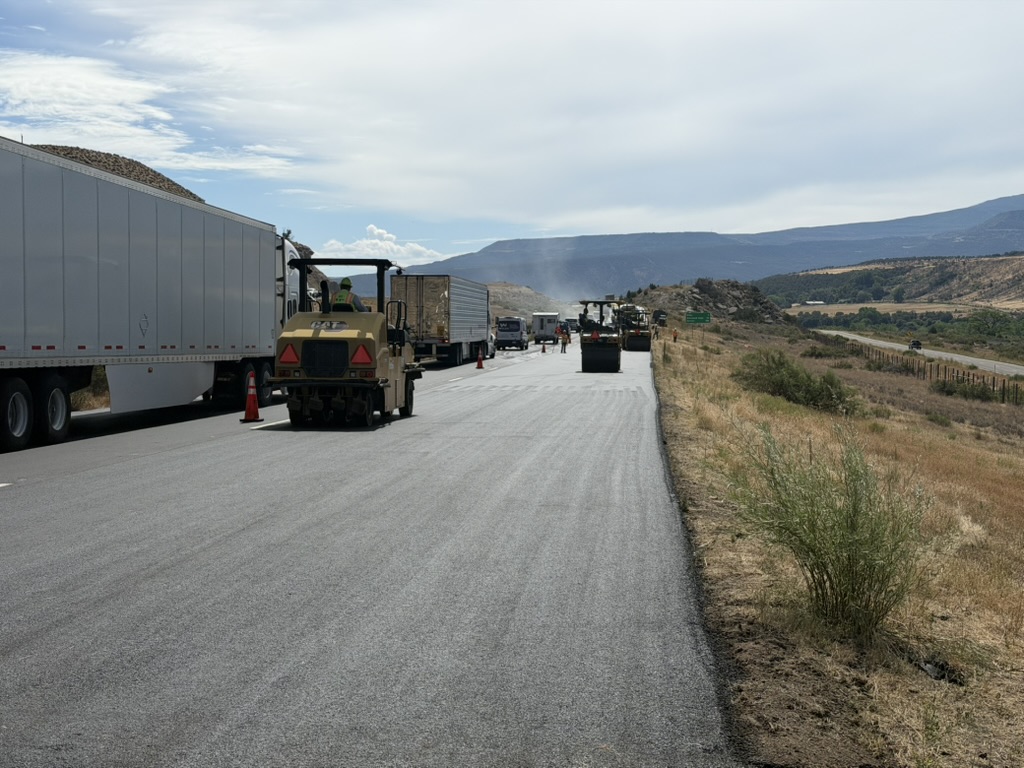
Photos from the CAPA HiMod project open house on I-70 near Rifle, hosted with CDOT Region 3 and Quikrete. Resources
APA High Polymer Binder Mixes Fact Sheet TXAPA HPG Binder Tips and Tricks We Are Here to HelpIf your agency has a corridor that might fit, whether an arterial, a truck route, a long reconstruction, or an airport apron, CAPA can walk through whether HiMod makes sense, connect you with the specification language, and put you in touch with the people who have now placed it in Colorado. Contact Brandon Brever, P.E., Director of Engineering & Technology, [email protected]. Local Agency Membership in CAPALocal agencies play a critical role in Colorado's transportation network, and CAPA offers a dedicated membership category designed specifically to support cities and counties. Membership is intended to strengthen communication between public agencies and the asphalt industry while supporting sound engineering, responsible budgeting, and long-term pavement performance. Approximately 80 Colorado local agencies are Agency members of CAPA. Learn more about membership benefits and how to enroll. 
Colorado Asphalt Pavement Association
6880 South Yosemite Court, Suite 110 co-asphalt.com [email protected] |