- Home
- Who is CAPA
- CAPA News
- Resources
- LabCAT
- RMAEC
- CDOT
- Career Center
 Introducing HiMod Asphalt to Colorado A Project Open House on I-70 — Expanding the Use of Asphalt Pavement with Highly Modified Binders by Brandon Brever, P.E.  This summer, CAPA is teaming up with Quikrete and CDOT Region 3 to host a Project Open House on Interstate 70 in Garfield County, between Rulison (Exit 81) and West Rifle (Exit 87). The event will showcase Colorado’s first application of HiMod (highly modified asphalt), the same high-performance product that has become the pavement of choice for the Utah Department of Transportation as they prepare for the 2036 Winter Olympics, and is now drawing interest from agencies across the country. The mix on this project uses a PG 76-34 highly modified binder, chosen for I-70’s heavy truck loads and Colorado’s wide seasonal temperature range. Attendees will get a trailer briefing, walk the active paving area, and watch the HiMod mat being placed in real time, with engineer, contractor, and lab personnel on hand for questions. I-70 HiMod Project Open House Where: Project job trailer, I-70 · Rulison → W. Rifle (north side, Rulison Exit 81) When: Late July (date TBD, subject to project schedule) Cost: Free to attend — registration required Who should attend: Pavement and construction professionals, CAPA members, and agency friends On-site PPE required: hard hat, safety vest, and appropriate footwear. Registered attendees will be notified of any schedule updates. 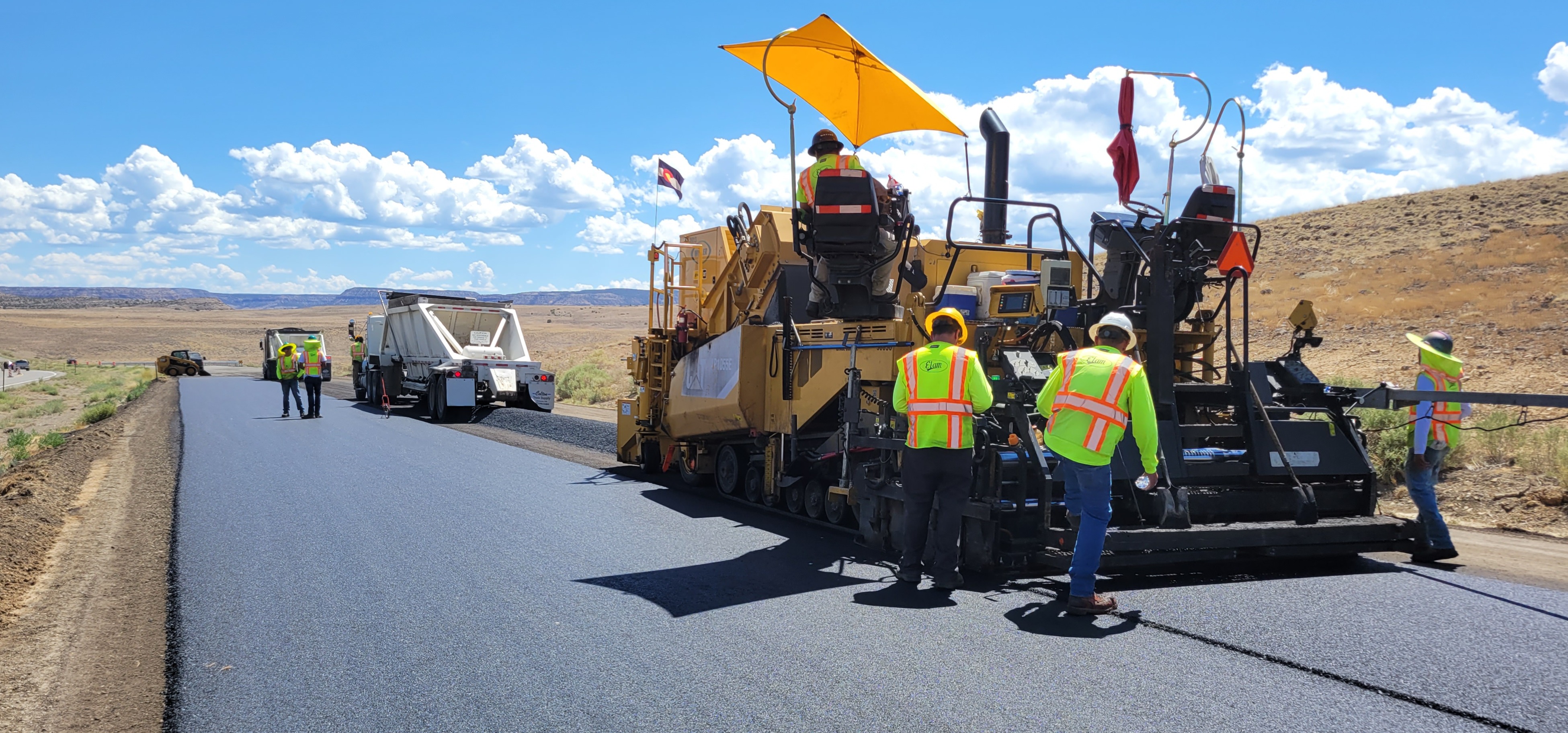 What Makes HiMod Different: Polymer The defining feature of HiMod is in the binder, the “glue” that holds the mix together. Conventional polymer-modified asphalt typically carries around 3% polymer (usually styrene-butadiene-styrene, or SBS). HiMod and other high-polymer binders run roughly 6%, and as high as 7–8%, more than double the conventional dose. A Florida DOT study built its comparison around exactly that contrast: a conventional binder at 3% SBS versus a high-polymer binder at 6% SBS. Unlike conventional polymer-modified binders, high-polymer binders contain significantly greater levels of polymer modification. Research and field performance have shown these binders can substantially improve rutting resistance, cracking resistance, and overall pavement durability, helping agencies extend pavement life and reduce future maintenance needs. Built on Research The performance case for HiMod is well documented. HiMA-modified dense-graded mixes have run on the NCAT Pavement Test Track since 2009. NCAT research has shown that HiMod mixes built with high-polymer or HiMA binders improve rutting and cracking resistance, durability, and compaction in thick single lifts, while delivering roughly 70% greater structural contribution and lower life-cycle impacts than conventional mixes. These dense-graded HiMod mixes are placed at low air voids (in some cases as low as 1%), often in a single thick lift using warm mix asphalt (WMA) technology. The Asphalt Pavement Alliance (APA) has pulled this research together in a concise fact sheet, High Polymer Binder Mixes, which is a good starting point for any agency weighing HiMod for its own program. The Utah Story: HiMod as the Standard Utah is where HiMod moved from proof-of-concept to standard practice. UDOT developed its “HiMod high density” mix using a high-polymer binder specification, first testing it on I-80 near Wendover in 2021. The dense, single-lift placement let crews lay the pavement in one pass instead of two thin lifts with even, high compaction throughout. Since then UDOT has made HiMod its default surface mix. In 2024 alone the agency programmed more than 500,000 tons of HiMod surface mix, designed intentionally with very low air voids, and it has replaced much of its previous stone-matrix asphalt (SMA) with HiMod. Why It Matters for ColoradoI-70 through Garfield County is exactly the kind of corridor HiMod was built for: heavy truck traffic and a climate that swings from hot summers to cold mountain winters. A stiffer, more elastic binder in a denser, thicker structure is designed to resist rutting under load while staying flexible enough to fight cracking. For agencies, the value proposition is simple: invest a little more up front in the binder, and spend less on repairs over the life of the pavement. We are here to help. CAPA can connect local agencies with the research, the specifications, and the people who have placed HiMod, and can walk through whether it fits an upcoming project. Come see it for yourself on I-70 this summer. Contact Brandon Brever, P.E., Director of Engineering & Technology, [email protected], 320-760-4707. APWA Fall ConferenceCAPA is glad to support APWA and the Colorado Chapter's public works community. This year, the APWA Conference Committee received many strong abstracts, and we're pleased to share that ours was selected for the program. Join us at the 12th Annual APWA Colorado Chapter Conference, held October 26 & 27, 2026 at the Denver Marriott West in Golden. Our session: Creative Strategies to Stretch Street Improvement Budgets We'll dig into practical ways local agencies can get more out of every street improvement dollar. Come see our session, and we look forward to seeing everyone there. Local Agency Membership in CAPAJOIN US Today!!! Local agencies play a critical role in Colorado’s transportation network, and CAPA offers a dedicated membership category designed specifically to support cities and counties. Membership is intended to strengthen communication between public agencies and the asphalt industry while supporting sound engineering, responsible budgeting, and long-term pavement performance. If your agency is not currently a member, we encourage you to consider joining. Link here to learn more about membership benefits and how to enroll. Approximately 80 Colorado local agencies are Agency members of CAPA. CAPA EventsCome and Celebrate Tom Clayton!! Retirement Party Planned for June 25 Webinar – Balanced Mix Design Open House Planned for HiMod Project on I-70 @ Rifle CAPA Summer BBQ 
Contact Info: Connect with Us: |